
AWP 2000: PLENARY SESSION
Salt Lake City, March 11, 2000
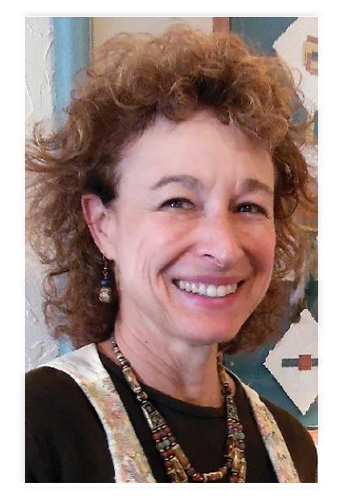
Beth A. Firestein, Ph.D.
I am sitting in my office across from a conscientious, professionally accomplished, divorced 48 year old woman, single parent of two teenage children. She is attending the session with her 16 year old daughter. Historically close to one another, mother and daughter have been having more frequent conflicts of late as their needs have become more and more disparate. Daughter is working on differentiation, autonomy and unbeknownst but strongly suspected by Mom—sexual self-discovery. Mom is feeling the need to protect and guide, perhaps even control her daughter through the sexual and emotional rapids of middle adolescence and they are coming into increasing conflict. Mom doesn’t like daughter’s boyfriend. Daughter sees his shortcomings, but is having the time of her life and really loves the boy, who is just a year or two older than she. Mom suspects they are having sex, and having been trapped into marriage by an unwanted pregnancy at a young age, Mom is terrified of her daughter’s budding sexuality—that it will be out of control, or that sex will somehow ruin her daughter’s life.
Having talked with each privately I know that daughter is, in fact, having sex with her boyfriend. I see clearly how mother’s well-intentioned, protectively motivated attempts at sexual control are driving a wedge between she and her daughter and the tension between them mounts daily. The daughter feels unable to be honest with her mother, knowing that honesty about her burgeoning sexual needs and desires would only produce an intensification of the conflicts they have already been having. I sit here as a feminist therapist watching the drama unfold and wondering what role I can usefully play to help heal the understanding between mother and daughter while respecting their differing age-related motivations and needs.
Feminist psychology provides me with little guidance in this arena. If I were sitting across from a young woman experiencing incest or sexual assault, I would know what to do. I check with the daughter and find out that she is being responsible about her sexual activity. She is having sex only with this boy and they are in a relationship that she perceives as emotionally trustworthy. She feels emotionally connected to him. And secretly, on her own, she has sought and obtained birth control. She is aware of at least the broadest parameters of safe sex and is engaging in pregnancy prevention. I offer her more specific information about the risk of various types of sexual activities, but she is generally well informed. I do not tell Mom she is having sex, but I do not deny or minimize Mom’s suspicions either. I wonder if I am doing the right thing.
As feminist psychologists, we have focused a great deal of our energy on unearthing the hidden horrors of sexual victimization. In so doing, we have performed a profound service to sexually victimized women, girls, men, and boys and profoundly and irrevocably removed society’s mask of denial around experiences of sexual victimization. It is probably one of feminist psychology’s greatest contributions to the culture. We have focused on issues of sexual abuse, sexual harassment and teen pregnancy. We have talked about the value of helping girls celebrate the passage into young womanhood marked by the onset of menses, and we have openly addressed the problematic ways that girls frequently find themselves silenced as they enter adolescence. We have spoken of girl’s needs to find their voices, but we have remained silent about their urgently felt need to find their clits, their passion, their sexual agency, or their sexual pleasure. Teenage sexuality terrifies us, and because it terrifies us, we are often unable to be helpful to our daughters in their times of greatest need.
I am here today to suggest that it is time for feminist psychology to move beyond an almost exclusive focus on women’s sexual victimization and into an affirmative, empowering, proactive perspective on girls and women’s sexuality. Our girls desperately need for us to do this and we need to do this for one another.
With a profound respect for both mother and daughter, I gently encourage Mom to loosen her controls and allow daughter her privacy and her sexual freedom. I was able to assure her that if her daughter was, in fact, being sexually active, I was confident that she was doing so with foresight and in a responsible manner. I helped mother explore the sources of her own fears about daughter’s blossoming sexuality and work through some of the trauma of her own early romantic disappointments, her personal history of sexual entrapment. Three months later, at follow-up, the daughter was still doing well in school, still working part time, and feeling closer and more comfortable in her relationship with her mother. Recognizing her boyfriend’s limitations, she was questioning whether she wanted to remain in her current romantic relationship, but was still enjoying the intimacy they shared. Mom reported less fighting between them and less anxiety about her daughter’s well being. While she would still have preferred that her daughter be more disclosing and not be sexually active, she was enjoying a more open communication with her daughter than they had known in years, and Mom was beginning to open up more about her early life experiences, sharing her wisdom and her source of her fears with her daughter so that her daughter could learn from Mom’s own life lessons. At six month follow-up, the mother daughter relationship remained stable and healthy and Mom was ready to deal with other issues related to career and other matters affecting her adult level of life satisfaction.
We are here today to initiate Difficult Dialogues within our own tribe, to open ourselves to the silenced and unacknowledged voices of women who occupy marginalized positions within the subculture of feminist psychology, to open our ears in a spirit of respectful listening and compassionate understanding to these minority voices, the voices of women who frequently perceive their lived experience as being at variance with feminist theory or who live out versions of feminism that we can not relate to or find intolerable. My task today is to highlight some of the challenges feminist psychology faces around issues of sexual diversity as we move into the new millenium. Teen sexuality is only one of the difficult and disturbing issues engaging the minds and hearts of feminist psychologists, and teens only one of a number of diverse sexual populations earnestly calling for a response of acknowledgement and acceptance by feminist psychologists.
We must not let our politics blind us to the voices of girls and women whose experiences may or may not reflect our own life experiences or the feminist analysis into which we came of age. As feminist psychologists of diverse ages, we are historically and culturally located at a multiplicity of intersections and our personal histories inevitably and profoundly affect our personal and political visions.
Today, I’ve been asked to speak about some of the issues around sexual diversity requiring that we engage in “difficult dialogues” with one another. I have been asked to begin by naming the diverse communities that I belong to or otherwise represent. I speak to you today as a woman and as a feminist psychologist whose personal biography contains no incest or child sexual abuse, but does contain a representative range of experiences of sexual victimization, including inappropriate sexual advances, sexual harassment in the workplace, and a date rape experience in college.
A sexually curious and active teen, I initiated a variety of sexually exploratory experiences that included the discovery of my bisexuality and sensuous/sexual experiences with more than one partner simultaneously. I fell in love with a woman for the first time at age18, and have sometimes maintained more than one loving or sexual relationship in my life at one time—today we call this polyamory. At 21, I became involved with a creative and imaginative lover with whom I got to explore a range of sexual fantasies, including discreet public sex and the emotional and sexual intensity of consensual power exchange, more commonly known as S/M. As I deepened into my study of feminist psychology, my S/M interests went underground and lay dormant for many years as I struggled to reconcile this aspect of my sexual desire with the prevailing feminist analysis of S/M as a form of violence against women. Although my personal experiences with S/M had never felt victimizing or violating, I wasn’t sure how to make sense of my new sexual experience in a way that could encompass both my identity as a feminist and the full range of my passionate expression.
I speak to you today as a feminist psychologist with a twenty year history of dedicated service to women who have been victims of violence. I have served as a rape crisis counselor, a volunteer at a domestic violence shelter, the administrative director of the Office of Women’s Services at a major four year university, and as a researcher of dating violence and its impact on women. I have counseled numerous women and men who have been victims of emotional, physical, and sexual violence. I also speak to you today as a sexually adventurous, bisexual, polyamorous woman and a member of the safe, sane and consensual leather community. The fact that I do not experience these diverse elements of my identity as contradictory or invalidating to one another reflects my sense of personal wholeness and integration. But claiming these aspects of my identity publicly feels like an enormous risk. Given traditional feminist concepts of female sexuality, I risk anger, censure, and the loss of the credibility of my feminist voice. I also risk being stigmatized, judged, and misunderstood by my feminist peers. But sexual silence is not the answer.
I am reminded of the words of Audre Lorde, who, facing a diagnosis of breast cancer once wrote, “In becoming forcibly and essentially aware of my mortality…what I most regretted were my silences. Of what had I ever been afraid? . . . I was going to die, if not sooner then later, whether or not I had ever spoken myself. My silences had not protected me. Your silence will not protect you.”
When our sense of self-identity as feminist psychologists rests exclusively on a feminist political analysis grounded primarily in women’s experiences of sexual victimization, we cannot make sense of the diverse sexual experiences of women whose forms of sexual expression may differ from our own. A teenage girl’s desire for sexual experimentation may be viewed as a reflection of low self-esteem and dependency on male approval, a woman’s desire for multiple partners becomes routinely pathologized as “promiscuity,” and girls or women who desire multiple sexual partners or actively initiate a range of sexual experiences see themselves as “sluts.” Women who enjoy consensual, adult sexual experiences involving consensual power exchange or other non-traditional forms of sexual expression are labeled victims of patriarchy rather than being recognized as self-aware, self-empowered sexual agents and potentially healthy role models for other sexually diverse women.
Sexual self-empowerment forms just as powerful and valid a foundation for feminist analysis as the recognition of women’s history of sexual subjugation and sexual victimization. We cannot judge the basis of a woman’s sexual motivation from the externals of her sexual behavior. We have to understand what that behavior means to her and honor her phenomenological reality. Just as there are women whose bisexuality represents a transitional experience en route to a fully formed lesbian identity, there are other women for whom bisexuality becomes an accurate, ongoing representation of their ability to love both men and women. Even as a majority of sex workers may be driven into sexual service by gender-oppressive economic conditions and patriarchal demand, we need to recognize and honor those women for whom sex work is an empowered choice reflective of their love of sex. A woman’s choice to have multiple sexual partners may reflect a fear of emotional commitment or an empowered personal and political choice to reject models of relationship involving possessiveness and “sexual ownership” between lovers. We cannot judge the feminist relevance of a particular form of sexual self-expression from the outwardly manifest behavior. We have to understand the experience of the woman who is living that reality. Every form of sexual expression is potentially feminist in its origin and in its impact.
I see this as the primary challenge facing feminist psychology with respect to the issue of sexual diversity: the challenge of stepping back from our own individual histories and traditional feminist political analysis long enough to listen anew to the voices of a new generation of girls and women, women and girls who have had the benefit of coming of age in an era of feminist-inspired sexual self-empowerment, women whose voices challenge us to make room for their different sexual realities, women who ultimately give us more room to discover and express ourselves.
I would like to conclude with another quote by Audre Lorde, who writes, “In the cause of silence, each of us draws the face of her own fear—fear of contempt, of censure, or some judgment, or recognition, of challenge, of annihilation. But most of all, I think, we fear the visibility without which we cannot truly live. [But] for every real word spoken, for every attempt I had ever made to speak those truths for which I am still seeking, I had made contact with other women while we examined the words to fit a world in which we all believed, bridging our differences.”