
Association for Women in Psychology
Vancouver, British Columbia
June 21, 2002
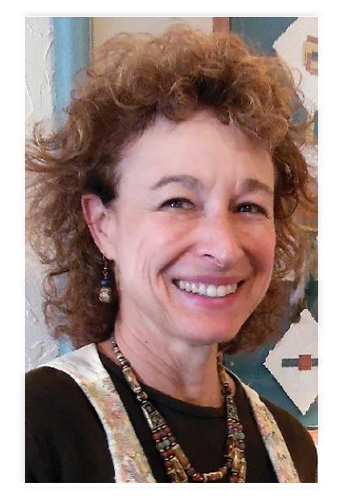
Beth A. Firestein, Ph.D.
Introduction
The growth of feminist psychology has increased our awareness of the revolutionary diversity of sexual and gender identities. Many of us are discovering that our core identities exist in the spaces between gay and straight, male and female, or other dichotomous categorical ways in which identities are usually constructed. Some of us have even come to embrace identities organized around one or more of the core elements of our sexuality. Desire is a powerful and shaping force that influences many of our sexual and non-sexual identity choices. Our desires may be simple or complex, extremely consistent in some areas of our lives and frequently changing in others. Sometimes our desires lead us into the spaces between the categories. These spaces can be difficult places to live. Validation, support, and community can make the critical difference between forming an identity riddled with self-hatred and developing an identity rooted in acceptance and expressed through celebration.
In this talk I wish to discuss the gifts and challenges we face as individuals and as therapists: as individuals coming to terms with our own increasingly complex sexual and gender identities, and as therapists committed to helping others who are more, less, and differently complex than ourselves. As feminist therapists we are committed to helping people come to terms with their complex identities in a context of radical self-honoring, equality, and empowerment. The difficulty of functioning from within a complex identity in a dichotomous, unaware, and frequently hostile environment takes a toll on every one of us and requires new, sophisticated ways of conceptualizing the developmental tasks associated with the emergence of diverse sexual and gender identities.
Most importantly, these are not simply theoretical issues. These are issues emerging in the lives of my friends, colleagues, and clients.
Living and Learning
Today, I wish to share a glimpse four individual’s lives and the gifts and challenges that arise as we all struggle to learn to “love the spaces between.” These individuals’ lives reflect the shifting currents of self-knowledge and experience that result in complex intersections of identities. I will share a bit about their stories, their struggles, and what they feel they need from therapists like us to truly benefit them as they struggle with the complexity of their lives.
Jan’s Story
I begin with Jan’s story. Jan is a 50-year-old single, Caucasian woman of Danish descent who was raised in the rural Midwest in a small town that thoroughly embraced traditional values. Her family maintained an active church affiliation. From the second grade on, Jan knew she was different. Her crushes, her nighttime dreams and her daytime infatuations were all directed toward the girls who played high school basketball, indicating to her she was somehow outside the cultural norm. At first Jan thought this meant that she wanted to be a boy, but she eventually realized that the only reasons she felt this way were because she wanted to be with girls and because the boys in her school were always allowed to do the exciting things.
None of the girls or women around Jan embraced the non-traditional paths of female development that were calling her soul. She dreamed of moving to New York or San Francisco to find herself. Jan felt isolated and different and unable to express her true self, an independently minded young lesbian girl looking for a way to make a difference in the world. She says of her growing up experience, “From a young age your real self is buried and you do not feel free to be your real self, which is not very liberating.”
In the 1970’s, Jan entered the corporate environment and witnessed ongoing harassment of gay men and lesbians who chose to come out in the work setting. Trust became a major issue and a shadow over Jan’s young adulthood, a shadow that resulted in prolonged periods of loneliness and struggles with self-esteem. The therapists Jan sought through this time were not very knowledgeable about lesbian life and seemed less then fully present to Jan’s struggles. This furthered her isolation for a number of years. Eventually, the corporate climate in her company changed, but not until well into the 1990’s. The formation of gay and lesbian employee networks and the Safe Space program reflected shifts in philosophy at the top levels of management. Even after moving to a more gay-friendly employment setting, Jan comes out to very few people at work or in her broader community.
Jan’s experience tells her that simply being a woman in this culture is a “space between.” In woman-centered environments she finds herself able to claim and share space, but she has found claiming space and visibility around men to be frequently exhausting. Being a single lesbian in her age group also feels like an in-between space in a lesbian culture that seems very couple centered.
When asked about the gifts she has gained as a result of her inbetweenness, Jan stated that she feels she is more open and accepting of diversity, that she can understand what others might be going through, and looks at others who are different with a softer and kinder heart. She says, “Thank God I am who I am—because I don’t want that other (heterosexual, married with children) life.” Now she finds it fun to be part of an underground community that is able to have a different take on life. She feels it allows her to get involved and care about other things beside herself. Her greatest challenges are around being able to find other people like her, something she still finds to be difficult. As Jan puts it, “Things don’t come to you. You have to go out and find them.”
Maggie’s Story
Maggie is a 41-year-old attorney who grew up in a white middle class town in Oklahoma with parents whom she describes as socially liberal and fiscally conservative. She describes her ethnicity as Scotch, Dutch, Irish, and German… and adds, “but I believe my soul is Mexican.” Her Oklahoma community was one in which “everyone wore bras, make-up, and did their hair all the time.” Her peers went to college, joined sororities, got married and had children. Believing that feminists were “crazy, bra-burning” types, Maggie didn’t discover that she was a feminist until she moved to Denver, started talking to people and discovered, “Son of a bitch, I am that.”
Maggie joined her peers in marrying at a young age and was married to her husband for 21 years. They separated five years ago and have only recently divorced. Maggie lived for many years within a conventional marriage and mainstream lifestyle, in which she went to work, came home, watched TV with her spouse and went to bed, usually without having sex. In her mid-thirties, Maggie rediscovered her sexuality but had no legitimized outlets for her sexual desire. She had an affair, then discontinued it and decided to recommit herself to the monogamy of the marriage, which essentially resulted in a long period of celibacy and sexual self-repression. The evolution of her identity unfolded through a journey of self-discovery that took place in several distinct stages.
There came a point where neither a sexless marriage nor illicit sexual affairs seemed like viable options to her. Maggie decided to approach her husband honestly about her desire to open up the marriage to outside sexual partners. To her surprise, he was open to doing this and they explored the heterosexual swinger community for a time. Sometime after opening their marriage, a sexual partner introduced Maggie to the book SM 101 and reading this book put her in touch with a whole new part of her sexuality. She had experienced fantasies of being tied up or held down during sex in the past, but this unlocked a whole world of possibilities. Maggie found an S/M community and becoming an active member of that community expanded her life and her self-concept in dramatic ways.
Eventually, she separated from her husband, though they remain close friends and currently share the same large home with their new, respective partners. Within the S/M scene, Maggie identified as a “heterosexual femme bottom,” but eventually discovered that her sexual attractions extended to women, particularly butch lesbians. Maggie began considering herself bisexual. The next step in her evolution came about a year ago, when a lesbian play partner helped her to discover “Max,” Maggie’s butch, top alter ego. She has had tremendous fun playing with these newly discovered aspects of herself. Maggie currently lives in a fulfilling primary relationship with a man with whom she shares love, companionship, and BDSM play. She also has other regular male and female play partners, many of whom are also close friends. She proudly states that she has not had vanilla (non-S/M) sex in five years and doesn’t care if she ever has it again. It just doesn’t interest her.
Of her current orientation, Maggie says, “I believe my orientation is innate, but you make the choice about whether you are going to let it out or not.” When asked what she perceives to be the benefits of her present lifestyle, Maggie states, “Compared to 15 years ago in my marriage with Tom, my life is 200 times better because I actually have one.” She describes the S/M lifestyle as a “buffet, “ a place where she feels free to sample many experiences and express herself in multiple, creative ways. And there is still a place for family in her life—she sees her parents, sister, grandmother, niece and nephew about four times a year.
The challenges of Maggie’s lifestyle include the fear that if people outside of her community find out about her that they will reject her, and the fact that her primary relationship partner has some difficulty dealing with her more masculine butch persona. And then there is what Maggie calls “the challenge of what to wear,” in other words, the choice of what part of herself she wishes to give expression to on a given night.
Maggie has also struggled with coming out to her family around these complex and stigmatized identities and with her longing for acceptance from her mother. Recently, she sought therapy to deal with her relationship with her mother and her own post-traumatic stress reactions around the terrorist events of September 11th, which had a profound emotional impact on her. The hard part was finding the right therapist, one who would not view her identity or her lifestyle as pathology, but would help her with the PTSD and the personal self-esteem, rejection, and sensitivity issues she feels she needs to resolve. She said that if she had not found a therapist who was familiar with her lifestyle, she probably would not have entered therapy at all, even though she felt she needed it.
Rene’s Story
Rene is 38 year old female-to-male butch Transman, who first came out as a lesbian at the age of sixteen, and was promptly placed into a psychiatric hospital by her parents and the courts. Her hospitalization was supposedly for “depression,” but in actuality she was put in the hospital because of her sexual “lifestyle” and very masculine gender presentation. Rene describes this as a time when many youth in that state were being hospitalized for having different sexual orientations and for minor rebellious behaviors, such as smoking pot or even simply for smoking cigarettes. The court systems and insurance companies supported these practices and oftentimes parents simply didn’t know what to do. Rene remained in an inpatient psychiatric setting until she was released at the age of 18.
After leaving the hospital Rene lived on her own for a short time but had few life skills to support her independence. Rene was struggling with financial hardship, little self-knowledge, and a profound lack of options, when she met a man who shared her passion for bicycle racing and decided to marry this man around the age of 19. She gave birth to the first of her two sons at the age of 24. During her marriage, she had an affair with a woman, rediscovering her own true identity—her sexual and emotional love for women. Rene separated from her husband at age 27 and moved to another part of the state, where she began to fully explore her butch identity and had several femme lovers. This period in her late twenties marked the beginning of coming into her own sense of self. Her husband attempted a reunion during this period and her second son was conceived through a sexual assault he perpetrated against her while staying in her home as a guest. She did not realize she was pregnant until she was too far along to have an abortion and gave birth to a second son.
Rene states that she was so masculine in appearance that even when she was pregnant she got called “Sir” in public, and that this felt perfectly OK and natural to her. She felt proud of her butch self, though she lacked role models for butch-ness, finding those models in literature but not in the lesbian feminist mountain community where she was living. She felt marginal to the dyke community, accepted only because of her romantic involvement with some of the more femme oriented lesbians in that community. A difficulty and a strength of her journey was having to discover her butch identity apart from any community, though she felt more at home in the dyke world than she ever had in the heterosexual world. Rene’s next step was a movement into the stone butch world. In her new city, Rene found that she was passing as male 95% of the time without even trying.
In her mid-thirties, Rene started looking at herself and wondering where she would be and how she would be living at the ages of 50 or 80, whether she would remain a butch dyke her whole life or wanted to transition to living full-time as a male. She never dropped her butch identity, but started to look into transitioning, partly because it was becoming a safety issue. Passing only part of the time was physically dangerous and led to difficulties with work, using public bathrooms, and other problems. Rene was living in Denver, Colorado around that time and discovered more of himself by connecting with the Gender Identity Center there.
Rene began transitioning while in a long-term relationship with a femme lesbian with whom she was living. Her increasingly masculine presentation triggered an identity crisis for her lesbian-identified lover, which led to the break up of their relationship. Now, Rene only dates “queer-identified femmes” rather than lesbian-identified femmes because those who identify as queer have room in their identities to accept him.
Rene began taking male hormones 4-5 years ago. Approximately three years ago, he changed his pronoun usage and began deliberately living full-time as male in his everyday life. Rene’s children, now ages 9 and 14, live with him part-time and still call him “Mom.” He has led support groups for the transgendered population in northern Colorado. Today, he is a student going back to college and moving toward an academic career involving Gender Studies. He works, dances, goes to school, parents his children, and enjoys bicycling and socializing with friends. He is not currently in a primary relationship but would like to have a partner someday. Rene may someday have at least partial body transforming surgery but that is not a financially feasible option nor a high priority at the present time.
When asked what Rene perceives as the gifts or blessings resulting from his difficult journey of self-discovery, he says, “I don’t have to learn to love who I am, since I already do, and I use my knowledge of myself and loving myself this way as a source of strength. I really think that the greatest benefit is being aware of the social pressures that are placed on both men and women in the United States to conform to certain types of roles.” The difficulties he encounters involve dealing with people who don’t understand and refuse to understand that who he is as an individual is not a true female or male. If he is “read” as transgendered, the usual response he receives is simply to be given strange looks and then ignored, but there have also been times when he has lost jobs, his children have lost friends, and he has been beaten up because of being differently gendered.
Lisa’s Story
Lisa is a Chicana lesbian in her late twenties. Her ethnic heritage contains a mix of US-based Northern European, American Indian, and Latino ancestry. Racially she is more Anglo, but culturally, she is more Latino. Lisa is a performance artist, a writer, and works in elementary education as a creative arts teacher to young children. She is in a long-term partnership with a woman she has been with since her early days in college and the two of them just had their first child via artificial insemination. Geoff, their gay male friend donated his sperm and actively functions as a third parent and father to their son, Zian. Geoff lives in the unit next door to Lisa, Allison and their one-year-old son Zian, which really enhances the ease of the tri-parenting arrangement. Lisa describes her journey from established categories to the spaces between as a series of discoveries.
Lisa says, “The word “experiment” captures the feeling I have moving through my life. It is necessarily searching and dissatisfied, there is some unmet need, some hope, some hypothesis. You don’t do experiments if you feel confident about how things are. But it is also open, undefined, a process of discovery. It is requires attentiveness, and a capacity for uncertainty. The risk is when the experiments reveal data that turn conventional wisdom, or cultural requirements, or traditional expectations on their head.”
She describes coming to terms with her multiracial heritage as “the longest, slowest journey of inbetweenness.” The next step of her journey consisted of realizing that she was “gay.” As Lisa remembers, “This realization was deeply at odds with my vision of myself, my values, and my community. When I first uttered the words aloud I sobbed and sobbed and thought the world would end. And a world did end. And I grieved for that world. And I feared for the unknown of this new world I found myself living in as the only known inhabitant. I felt so lonely and so unmoored. Of course more experiments followed, and learning, learning, learning. This one was one of the more life-shattering crisis points.”
Her next crisis point occurred around the discovery that she was differently gendered. Lisa shaved all of the hair off of her head on a whim, not realizing that doing so would change her life. People thought she was a boy. At first she felt absolute terror and embarrassment at being “mistaken” for a boy. Over time, this changed for her. She says, “It was the fear of something true but unacceptable, and I was defiant even in my shame. I kept on. And I liked it. And eventually I exploited the ability to pass and part of me became or was realized as a boy and this continues to be a fluid part of my daily life.” She describes it as a less traumatic “crossing” than her initial coming out as gay, because gender fluidity was more acceptable within her new sense of self, values, and community.
Her next discovery involved the traumatic realization that she was polyamorous, that is, that she loved and wanted to be intimate with more than one woman at a time. This realization was difficult both for Lisa and also for her long-term female partner. She describes the intensity of this crisis as rivaling her experience of coming out as gay—painful, scary, and full of shame and denial, but one that she and her partner have been able to work through to a place of mutual trust and acceptance.
Lisa’s most recent shift involved the discovery of her interest in BDSM, a development that has taken place over the past two or so years. And while this development was certainly another level of “transgression” of cultural boundaries, she states that it didn’t even match the level of panic that accompanied gender-bending. But what did match this transition in level of intensity was—in the midst of all of this—becoming a mom. Lisa states, “And of course not a mom in any culturally acceptable way, but the non-biological mom of a child born of the “artificial insemination” of my lesbian partner with the sperm of our gay male friend who is a fully and equally involved parent.”
Lisa continues, “I’m in the constant practice of this latest inbetweenness. For a while, I literally felt like I could never have a conversation with a stranger again. I just had no clue how to fit all of myself into any conversation. More recently, my mom-identity is a playful zone of fluidity that shifts and changes to incorporate sex/race/gender/family and relationship structure, depending on mood and circumstance.”
When asked about the blessings and challenges of loving the spaces between, Lisa writes,
“The truth is, I love it. I feel like this journey has been such a precious gift. I feel such a huge capacity for compassion (towards myself and others) and I think it is a direct result of all that heartbreak and fear and shame and panic. I am so grateful for whatever internal drive kept me going past all those scary points where I felt like I was crossing a terrible line, because the other side feels like joy, truth, contentment, God. It’s similar to that feeling you get after intense physical exertion. Exhausting and deeply satisfying.”
Lessons for Therapists
So what can we learn from these women’s stories? Everyone I interviewed had ideas of what they would like therapists to understand about the real needs of people like themselves who seek therapeutic support and assistance.
Jan said that of all the therapists she had seen, only her current therapist seemed genuinely concerned, compassionate, engaged, interested, and caring. What has helped most is the message, delivered in multiple ways, “You are fine just the way you are.” Jan calls the message that she was not fine the way she was, a message she heard most of her life, a “false inner truth”, and a difficult message to override.
She also encourages therapists to realize the importance of touch in therapy: a simple touch offered during a moment of intense grief and profound feelings of aloneness proved to be a key turning point for Jan in her current therapy. To her it symbolized a shift from past feelings to awareness that the present is different and the realization that she is no longer alone in this journey.
Maggie believes that it is extremely important that therapists not pathologize difference, but look at what is and isn’t working within that difference. She does not want to have to educate her therapist to the culture and etiquette of her S/M community and she does not feel the need to be “cured” of any part of her unique identity. She says that what she wants is to be cured of her rejection complex. She feels that uncovering and embracing stigmatized aspects of her identity has made her more sensitive to rejection because she no longer feels the safety of belonging to socially acceptable identity categories.
Rene expressed his strong concern that so much of the psychology profession still views transgender identity as an illness. When speaking to therapists and students in the psychology department at a nearby university, he feels that his audience is often unable to see beyond the trans issue to see him as a healthy individual who is a successful parent, student, and activist.
Still, he believes there is a role for therapists to play with differently gendered individuals. The most important of these is helping clients come to an acceptance of themselves as the healthy people that they are. Therapists can also play a valuable role in helping clients come to terms with the experiences of rejection and emotional or physical violence they may encounter as a result of being different and being themselves. These experiences create tremendous stress in individuals’ lives and people sometimes need assistance to overcome the traumatic impact of these events and to learn positive survival skills.
Lisa has worked individually with a licensed psychologist, several psychiatrists, and a life coach. She has also experienced couple counseling with a psychologist and family counseling with an LCSW. She was willing to offer a few tips for therapists working with “inbetweeners”. She says, “There are exceptions. And exceptions should be made for exceptions. This could mean meeting with multiple partners, meeting in alternative spaces, welcoming diverse gender performance, being sexually explicit, practicing a different language or using an interpreter, redefining professional boundaries, or doing research.” Many of her ideas challenge our conventional wisdom as therapists.
She says that therapy situations have been strained when the therapist could not adapt their tools, style, or vision to the unique realities of her situation. For Lisa, her most successful experiences have occurred when she has had a personal connection of some kind with a therapist prior to counseling, when she has been encouraged and allowed to define her own terms from the beginning of the process (instead of trying to fit into someone else’s framework), and when the counseling situation has been characterized by therapist flexibility and experience and/or expertise in alternative lifestyles. She encourages therapists to acquaint themselves with the written work and biographies of “inbetweeners” such as those whom they are hoping to serve.
There is a great deal to be said for the value of listening to the voices of those living and loving in “the spaces between”. Jan, Maggie, Rene, and Lisa each provide us with clues about how we can be more truly helpful to our diverse clients.
Summary
As a bisexual woman, a feminist, and a woman who has made non-traditional sexual and lifestyle choices, I have learned to live in more than one world. The tension involved with living in multiple worlds is sometimes thrilling and, at other times, almost unbearable. I do not always find it easy to love “the spaces between” in my own life or identity. Sometimes I find myself railing against my own sense of difference, craving a sense of belonging in a world that I know can never fully embrace me. I have had to become comfortable with vast differences in public and private personas. I seek comfort in the arms of my vanilla, heterosexual, male lover and know with certainty that there are parts of who I am that will never find witness here. I continue searching for my life partner, wondering if all of me can ever find a home in such a singularity of romantic focus, but longing for the emotional safety of one-on-one connection.
I continue to inhabit multiple worlds with as much transparency and integration of identity as I can muster. I am a bridge between worlds. I continue working as a therapist, creating a safe haven where those who are different can find affirmation, understanding, and help with their process and with their problems. I create a space within the healing professions where who they are and what they desire is not made to be “the problem,” where focused insight and the tools of our profession are used to dismantle the house of oppression and construct new, creative and dynamic shelters where an evolving sense of self can be nurtured to fullness of expression in a way that does not rupture self or key relationships of connection. It is some of the hardest work I have ever done, and the most beautiful. It is a moving testament to the strong and powerful basis of our work as feminist psychologists. And often, I feel joy.
Sometimes I succeed in pulling myself free of the gravitational pull of the cultural planet we all orbit, and for a time, I orbit instead in the gravitational field of my own small planet. I feel the security and freedom of orbiting my own center in the reflected light of the larger planet of the culture of my birth. I experience both the connection and the distance from my roots and the new, more authentic sense of belonging I feel as a community of other travelers begins to form around me. I chart my own course. Sometimes, I experience the elimination of that sense of separation between my own small world and the universe of personal and relational possibilities. At those moments, all aspects of my identity merge and I feel myself to be one with the larger culture. At these times, I experience a boundless joy, inner peace, and the deep knowledge that in being exactly who I am, I am helping to shape that culture and creating space for others—both similar and different from me, to more readily find a welcoming space in which to discover the truth of their own identities and intersections. My hope today is that my journey and the journeys of my friends and clients may, in some small way, illuminate yours.
6/20/2002
Loving the Spaces Between #4